


When it comes to roofing and cladding, fasteners are often overlooked. Yet they play a critical role in keeping roof sheets secure, weather-tight, and performing as intended over time.
Whether used on residential, commercial, or industrial projects, selecting the correct roofing fastener or roofing screw and installing it properly directly affect the long-term performance and durability of the roof.
WHY FASTENERS MATTER IN ROOFING SYSTEMS
Roofing fasteners secure roof sheeting to the supporting structure while helping the roof resist wind uplift, movement, and ongoing weather exposure.
Incorrect fastener selection can lead to premature corrosion, water ingress, and loose sheets, even when the roof sheeting itself is still in good condition. For this reason, roofing screws should always be considered part of the complete roofing system, not an afterthought.
DESIGNED FOR SOUTH AFRICAN CONDITIONS
Roofing systems across South Africa are exposed to varied environmental conditions. Coastal regions experience high humidity and salt exposure, while inland areas are affected by temperature changes, wind, and industrial pollutants.
Roofing fasteners must be specified with these conditions in mind. Using roofing screws that are not suited to the corrosion environment can significantly shorten their lifespan and compromise roof performance.
UNDERSTANDING CLASS 3 AND CLASS 4 ROOFING FASTENERS
Class 3 and Class 4 roofing fasteners refer to corrosion performance standards tested in accordance with SANS 1273 and aligned to ISO 9223 corrosion category environments. These classifications indicate the level of corrosion resistance a fastener provides, with higher classes offering increased protection in more demanding conditions.
- Class 3 roofing screws are suited to moderate corrosion environments
- Class 4 roofing screws are designed for more aggressive conditions, such as coastal or industrial areas
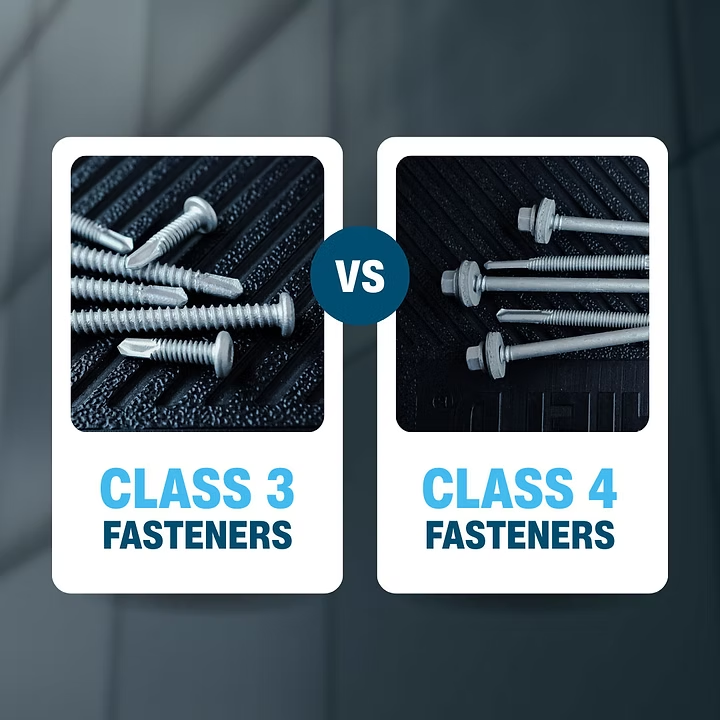

These standards help ensure that roofing fasteners meet minimum performance requirements for their intended environment and application.
Youngman Roofing recommends the minimum use of Class 3 and Class 4 roofing screws when installing their metal roof sheeting, depending on project location and exposure conditions.
For application-specific recommendations, it is advisable to consult with a technical specialist to ensure the correct corrosion class is selected.
MANUFACTURING QUALITY AND PERFORMANCE
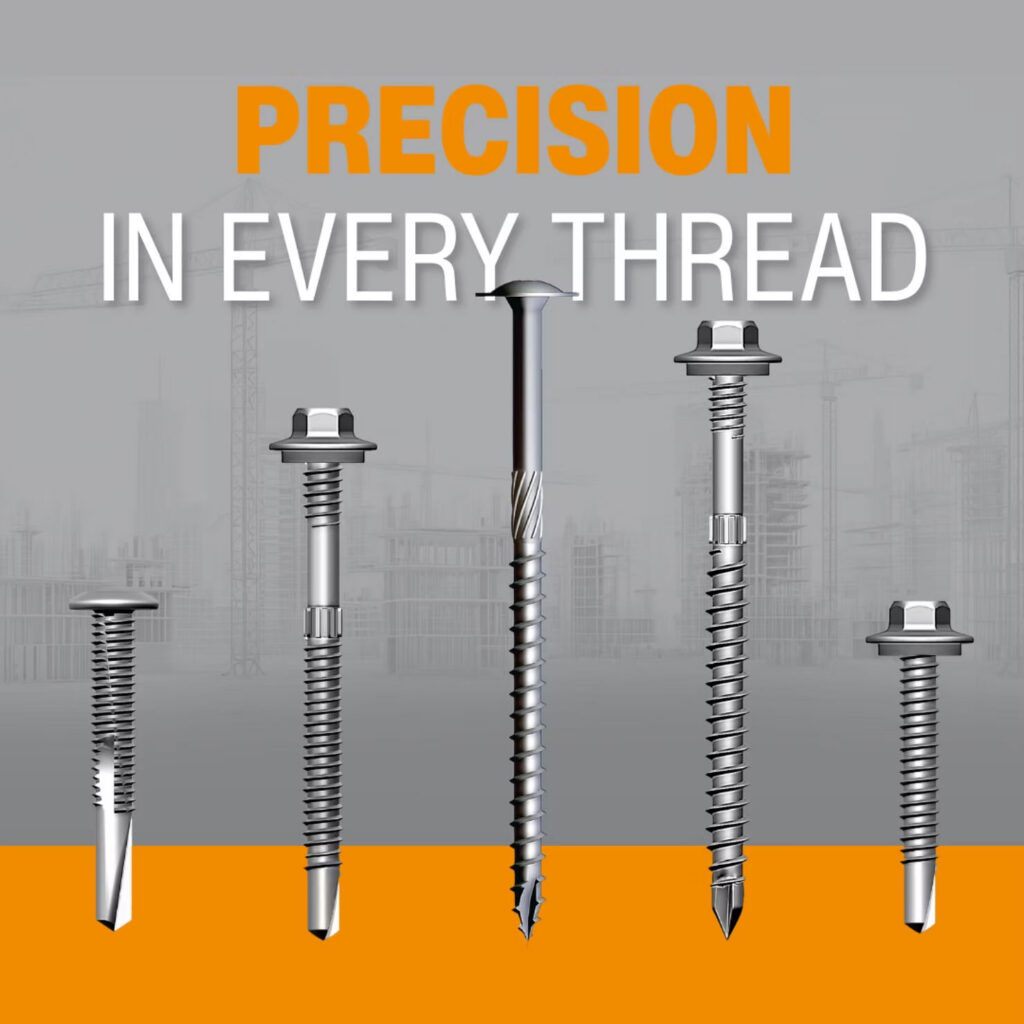
Roofing fasteners are manufactured to deliver strength, consistency, and reliable installation. Precision manufacturing ensures accurate drilling performance, consistent threads, and secure holding power.
Well-designed roofing screws drill cleanly through steel or timber substrates, reducing damage to the fastener coating and roof sheeting during installation. This contributes to improved corrosion resistance and long-term reliability.
CORROSION PROTECTION AND COATINGS
Protective coatings play a vital role in roofing fastener performance. These coatings help shield the underlying steel from moisture, salts, and airborne contaminants.
Quality coating systems are designed to slow corrosion and extend fastener lifespan, particularly in more aggressive environments. Correct specification of these coatings supports long-term roof performance and reduces maintenance requirements.


INSTALLATION QUALITY AND SYSTEM LONGEVITY
Even the best roofing fastener can underperform if it is incorrectly installed. Over-tightening, incorrect fixing positions, or damaging the protective coating during installation can all reduce effectiveness.
Correct installation practices help protect the fixing point, maintain weather-tightness, and support the overall lifespan of the roofing system.
A SYSTEM APPROACH TO ROOFING
Roofing fasteners may represent a small portion of the total roofing cost, but their impact is significant.
Correct fastener selection supports:
- Secure fixing under wind load
- Improved corrosion resistance
- Reduced risk of leaks
- Extended roof system lifespan

Working with a supplier that understands local conditions and roofing systems helps ensure the correct roofing screw solution is specified from the start.
FREQUENTLY ASKED QUESTIONS: FASTENERS
How many screws do you really need per m²?
For standard installations, we recommend five fasteners per square metre for IBR roof sheeting and seven fasteners per square metre for Corrugated roof sheeting. For concealed fix systems, always follow the recommended fastener quantity for the concealed fix clips.
Crest fixing vs valley fixing – which is best?
Crest fixing is recommended for roofing applications, as it helps improve weather resistance and long-term performance. Valley fixing is more suitable for cladding applications where water run-off is not a primary concern.
Why do roofing screws rust?
Roofing screws typically rust due to inferior-quality fasteners, incorrect specification for the corrosion environment, or poor installation practices that damage the protective coating during installation.
CLOSING WORD
Roofing fasteners and roofing screws may be small components, but they play a critical role in roof performance, durability, and long-term reliability. Correct selection and installation help protect the entire roofing system and reduce avoidable issues over time.
For specifications, guidance or quotations, visit: www.youngman.co.za